How Casino Platforms Integrate Multiple Game Providers via APIs
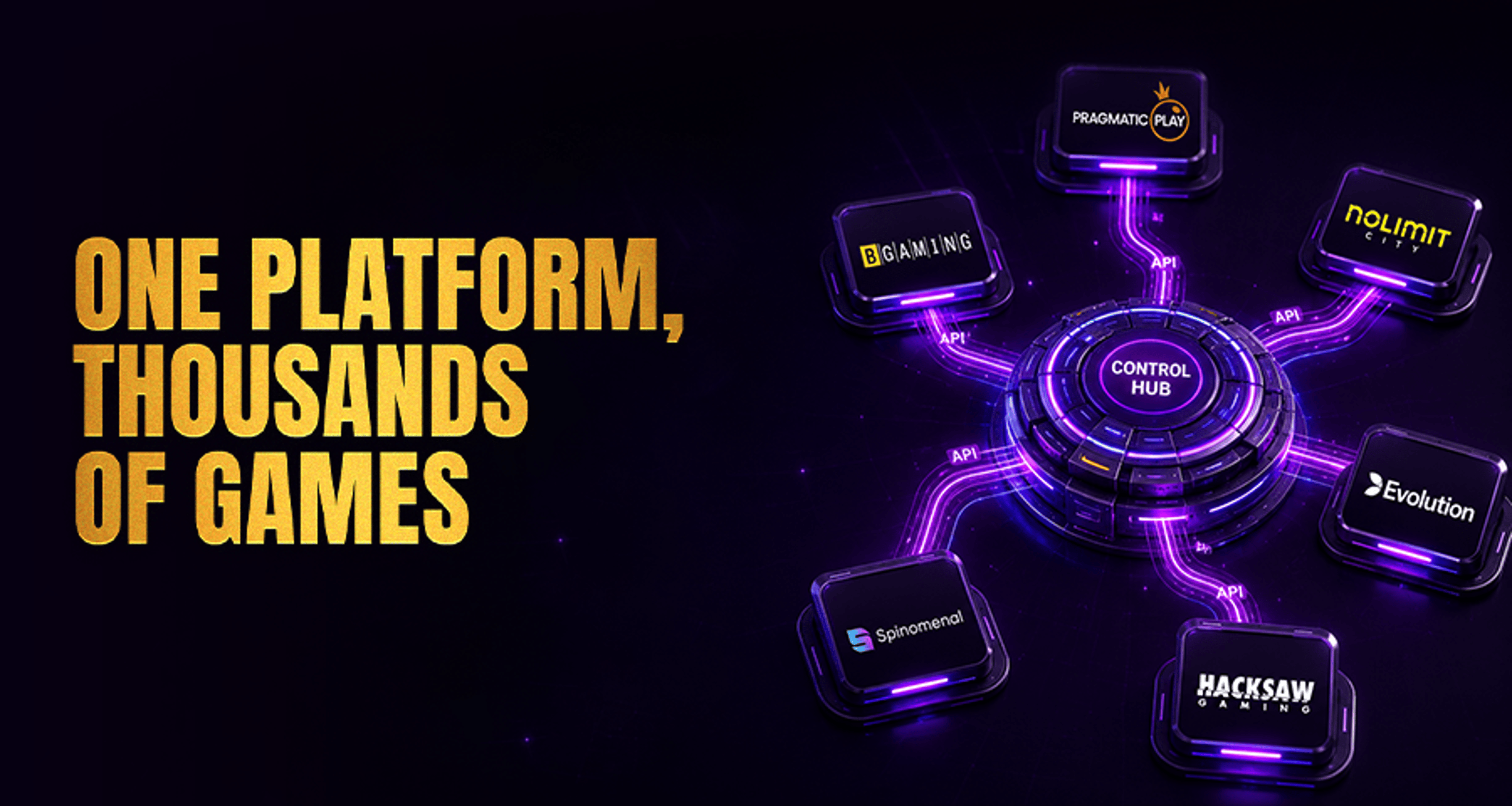
How Casino Platforms Integrate Multiple Game Providers via APIs explains how operators connect multiple studios, syncing wallets, game launches, and data while ensuring a seamless player experience across one platform.
As casino platforms expand their content stack, adding more game providers is rarely a simple endpoint connection. Each provider can bring different authentication rules, launch methods, wallet logic, event structures, reporting formats, and support expectations.
That is why understanding how casino platforms integrate multiple game providers via APIs matters for operators planning a scalable backend architecture.
At a high level, the goal is to connect several external game studios into one unified platform environment. In practice, that work extends well beyond the API itself.
Operators need to coordinate lobby mapping, catalog normalization, wallet and balance synchronization, session handling, bonus compatibility, reporting alignment, uptime monitoring, pre-live certification, and long-term maintenance.
This article explains the operator-side workflow behind multi-provider integration, compares direct, aggregator, and hybrid models, and outlines the technical and operational tradeoffs that shape a sustainable provider strategy.
What It Means to Integrate Multiple Game Providers via API
When casino platforms integrate multiple game providers via APIs, they create the backend connections that let external game content run inside their own product environment.
These APIs often support functions such as authentication, game launch requests, balance checks, transaction handling, session validation, and reporting callbacks or exports.
The complication is that providers do not all structure these functions in the same way. One studio may require token-based launch sessions, another may depend on server-to-server wallet confirmation, and another may be available only through an aggregation layer.
Providers also differ in API conventions and support depth, so operators should not assume that a structured integration workflow means implementation effort is standardized across every studio.
For operators, this means the API is only one layer of the implementation. The platform also needs to:
Ingest and organize each provider's game catalog
Normalize game metadata into an internal schema
Route launches to the correct provider or aggregator endpoint
Align wallet and account behavior across external systems
Maintain session continuity and recovery logic
Reconcile reporting for operations and analytics
Monitor uptime, errors, and provider-specific incidents
Direct API vs Aggregator API: Which Model Fits Your Platform
Most operators evaluating multi-provider delivery choose between three models: direct integrations, aggregator-based integrations, or a hybrid mix of both.
Direct provider integration
In a direct model, the casino platform connects separately to each game studio's API. This gives the operator more control over implementation details, provider-specific features, release timing, and data handling.
Advantages of direct integration:
More control over provider-specific features and workflows
Greater flexibility in catalog configuration and launch behavior
Fewer intermediary dependencies between platform and provider
Easier access to provider-native operational data in some setups
Tradeoffs of direct integration:
Higher engineering and QA effort for every provider added
More maintenance across API versions and release cycles
More custom logic for launch, wallet sync, and reporting
Slower scaling when onboarding many providers at once
Direct integrations tend to suit operators with stronger in-house technical capacity or specific provider relationships that justify deeper control.
Aggregator API integration
In an aggregator model, the operator connects to a middleware platform that already maintains integrations with multiple studios. The aggregator becomes the intermediary layer between the operator platform and the provider network.
Advantages of aggregator integration:
Faster onboarding across a wider content set
Lower initial engineering effort
More standardized provider activation workflow
Centralized handling for some integration differences
Tradeoffs of aggregator integration:
Less control over provider-specific implementation details
Dependence on aggregator support processes and release timing
Possible limitations around custom promotional hooks or feature logic
Extra troubleshooting layer when incidents occur
Aggregator standardization can simplify onboarding, but it does not eliminate provider-specific exceptions underneath the middleware layer. Operators still need to account for edge cases in launch behavior, wallet handling, metadata quality, and reporting outputs.
Hybrid integration
A hybrid model combines both approaches. Operators may use an aggregator for broad coverage while building direct integrations for priority studios that need deeper technical control, better data visibility, or tighter commercial coordination.
This model can work well for growing platforms when content breadth matters, but certain providers still justify direct ownership because of reporting requirements, promotional dependencies, or support expectations.
The Core Systems Behind Multi-Provider Integration
A successful multi-provider setup depends on more than working endpoints. Several internal systems have to cooperate so provider content behaves consistently inside one operator environment.
Authentication and access control
Each provider or aggregator typically uses its own authentication pattern, such as API keys, signed payloads, IP whitelisting, session tokens, or environment-specific credentials. Operators need clear credential handling across staging, certification, and production.
Content and catalog normalization
Providers rarely describe games in identical formats. Categories, game IDs, thumbnails, localizations, release flags, device support, and metadata labels often arrive differently.
Operators need an internal schema to normalize these inputs before exposing them in the lobby or reporting layer.
Without normalization, platforms inherit inconsistent naming, fragmented categorization, and avoidable content operations overhead.
The same discipline that supports backend mapping also helps teams maintain a more coherent presentation layer when organizing titles against broader content standards, such as a casino game style guide.
Lobby mapping and game routing
After normalization, the platform still has to decide how each title is routed and presented. That includes category mapping, provider labels, market filtering, search indexing, and launch endpoint selection.
Wallet and account services
Wallet architecture is one of the most important layers in any multi-provider environment. The platform needs a reliable method to validate balances, authorize transactions, prevent duplication, and keep account state synchronized while multiple external systems participate in the transaction flow.
Session and runtime state management
The platform must maintain session continuity across login, launch, reconnect, timeout, and error scenarios. This becomes especially important when a provider requires revalidation or when an interrupted game session has to be resumed cleanly inside the operator's own account and wallet framework.
Bonus compatibility and promotional logic
Bonus handling deserves explicit planning because support often varies by provider. One integration may support bonus-eligible play through standard transaction flags, while another may require custom promo hooks, provider-side configuration, or separate handling for free-spin campaigns.
Operators should confirm, at minimum:
Whether bonus eligibility can be passed during launch
How free-spin or promo entitlements are triggered and consumed
Whether bonus-funded play uses different transaction states
How provider rollbacks affect bonus balances or wagering logic
Whether aggregator middleware limits access to provider-specific promo features
If bonus compatibility is not aligned early, operators can end up with a technically live provider that does not fit existing promotional workflows.
Monitoring and incident response
Operators need visibility across provider APIs, aggregators, and internal services. That includes launch failure alerts, response-time tracking, transaction mismatch detection, and outage escalation paths.
Teams building that layer can also use related ideas from real-time gambling monitoring when shaping observability, alerting, and oversight across multiple external dependencies.
How Game Launch, Wallet Sync, and Session Handling Usually Work
Although implementation details vary, the workflow behind a multi-provider launch flow usually follows a recognizable pattern.
1. The platform resolves the requested title
The lobby references an internal game record that maps to a specific provider or aggregator game ID.
2. The platform validates account and runtime context
Before launch, the operator platform often checks:
Account status
Wallet availability
Currency and market configuration
Bonus eligibility or promo state
Device and environment requirements
3. The platform requests a launch session
Depending on the integration model, the platform calls either the provider API directly or an aggregator endpoint. This request may return a launch token, session key, redirect URL, or embedded client configuration.
4. The game client opens with authenticated session data
The game launches through a provider-hosted or embedded flow. At this stage, session integrity matters. Expired tokens, callback mismatches, and environment misconfiguration are common causes of launch failure.
5. Wallet synchronization processes gameplay transactions
During gameplay, wallet activity is usually handled through one of these patterns:
Transfer wallet model: funds move into a provider wallet before play
Seamless wallet model: the operator wallet remains the source of truth and transactions are confirmed in real time
Hybrid variants: specific providers or content groups use adapted logic
Seamless wallet setups can reduce balance fragmentation, but they also depend more heavily on idempotent transaction handling, stable callbacks, and low-latency responses.
6. Bonus and promo states are applied consistently
If the session involves bonus-funded play, free spins, or campaign entitlements, the platform must keep bonus state synchronized with provider events. A mismatch between provider event timing and internal promo logic can create support, reconciliation, and campaign-reporting issues even when the game launch itself works.
One provider may send a rollback using the original transaction ID and expect the operator to reverse the exact wallet entry, while another may issue a new rollback reference several minutes later after its own settlement check completes.
If the platform treats both patterns the same way, balances or bonus ledgers can drift even though each provider is behaving according to its own spec.
7. Session closure and reconciliation complete the cycle
When gameplay ends, the platform may need to reconcile incomplete transactions, refresh balances, store round records, and push data into reporting pipelines.
In production, this flow must also handle retries, duplicate callbacks, timeout scenarios, and partial provider outages.
Common Integration Challenges Operators Need to Plan For
As more providers are added, complexity compounds across both engineering and operations.
Versioning and API change management
Providers and aggregators evolve endpoints, fields, authentication rules, and launch behavior over time. Operators need version tracking, regression coverage, and rollback plans.
Provider-specific implementation differences
Not all providers support the same wallet structure, metadata depth, session behavior, reporting detail, or promo hooks. Assuming uniform standards across every integration creates avoidable breakpoints.
Latency and timeout sensitivity
Launch requests and wallet calls depend on fast communication between platform, middleware, and provider. Each extra routing layer can add latency, especially in aggregator and hybrid environments.
Testing overhead
Each new provider expands QA coverage across currencies, devices, launch methods, transaction cases, session recovery, and bonus states. Sandbox quality also varies widely, which increases validation effort.
Certification and UAT workflow
Pre-live approval is often a separate workstream from the technical connection itself. Depending on the provider or aggregator, operators may need to complete staged certification, structured UAT scenarios, evidence collection, and sign-off before production access is enabled.
A practical certification workflow often includes:
Validating launch, wallet, and rollback scenarios in a test environment
Checking game metadata, lobby mapping, and market configuration
Confirming bonus and promo behavior where supported
Verifying reporting outputs against expected transaction cases
Documenting known exceptions and production go-live conditions
This step matters because a provider can be integrated at the API level but still not be operationally ready for release.
Incident ownership and escalation
When a launch fails or balances drift, the root cause may sit with the operator platform, the aggregator, the provider, or a shared dependency. Clear logs and escalation ownership are critical.
Ongoing maintenance load
A larger provider stack means more release notes, more exceptions, and more edge-case handling. Integration scale should be measured not only by provider count, but by how sustainably the team can support the stack over time.
How to Standardize Reporting Across Different Providers
Reporting alignment is one of the most underestimated parts of multi-provider integration.
Providers may define rounds, wagers, rollbacks, refunds, and sessions differently. One provider might treat a cancelled round as a rollback event tied to the original transaction ID, while another may report it later as a separate refund record with a new reference.
If those events are ingested without normalization, finance and operations teams may see mismatched totals even though both providers behaved as designed.
A practical reporting framework usually includes the following:
Unified event mapping
Map provider-specific events into a common internal model for:
Game launches
Rounds started and settled
Transaction states
Rollback and retry events
Session terminations
Standard KPI definitions
Operators should define internal metrics such as launch failure rate, transaction volume, session activity, reconciliation exceptions, and provider availability before feeding provider data into BI or operational dashboards.
Reconciliation logic
Because providers often report asynchronously, platforms need jobs that compare wallet records, provider transactions, promo ledgers, and internal accounting outputs. This is especially important when retries, delayed callbacks, or rollback events occur out of sequence.
Field-level normalization
Operators also need rules for mismatched data fields across providers. Common examples include transaction IDs that are unique only within a provider environment, rollback references that point either to the original debit or to a new compensating record, status timestamps that reflect event creation rather than settlement completion, and settlement states that differ between pending, confirmed, cancelled, or refunded logic. Standardizing those differences early makes downstream analytics and finance review more reliable.
Provider performance monitoring
Normalized tracking for uptime, response time, error rates, and unresolved mismatches gives operators a more useful basis for deciding whether a provider belongs in a direct, aggregator, or mixed delivery model.
Choosing the Right Multi-Provider Integration Strategy for Growth
There is no universal best model for every casino platform. The right choice depends on technical capacity, launch speed requirements, desired control, reporting needs, and long-term maintenance tolerance.
Side-by-side comparison of integration models
Model | Speed to onboard | Control over implementation | Catalog breadth | Maintenance load | Troubleshooting ownership |
|---|---|---|---|---|---|
Single aggregator | High | Lower | Broad | Lower at launch, moderate over time | Shared across operator and aggregator |
Direct integrations | Lower | High | Selective unless scaled gradually | High | Mostly operator and provider direct |
Hybrid model | Moderate | High on priority providers, lower on aggregated content | Broad with selective depth | Moderate to high | Split across operator, aggregator, and direct providers |
Choose a single-aggregator approach if:
Speed to market is the top priority
The team needs broad provider access without building many separate integrations
Internal engineering resources are limited relative to content expansion goals
Some loss of provider-level customization is acceptable
Choose direct integrations if:
Selected providers are commercially or operationally strategic
The platform needs tighter control over launch logic, reporting, or promotional behavior
Internal teams can absorb heavier certification, QA, and maintenance work
Provider-level data visibility matters more than faster onboarding
If reporting precision, provider-level reconciliation, or custom operational controls are business-critical, slower onboarding can still be justified because direct integration gives the platform more authority over how data is mapped, monitored, and maintained.
Choose a mixed approach if:
The platform wants broad coverage but does not want every provider handled the same way
Aggregator delivery suits long-tail or fast-launch content needs
Direct integrations are reserved for top-performing or operationally demanding studios
The team wants to reduce dependency on a single delivery model as the stack grows
A practical decision framework should score each model against five operator-side questions:
How quickly do new providers need to go live?
How much provider-specific control does the platform need?
How broad does the active content catalog need to be?
How much ongoing maintenance can the team absorb?
Who should own troubleshooting when launch, wallet, or reporting issues appear?
For most operators, the strongest long-term architecture is not the one with the most providers attached. It is the one that can onboard, monitor, reconcile, and support provider content without creating operational drag.
In practice, that means staying focused on integration operations, data ownership, support model selection, and maintainability as the provider stack expands.
Conclusion
To understand how casino platforms integrate multiple game providers via APIs, operators need to look beyond the connection layer alone.
The real implementation work spans authentication, launch orchestration, wallet synchronization, session management, bonus compatibility, catalog normalization, reporting alignment, certification, and ongoing maintenance.
Direct integrations offer more control. Aggregators can reduce onboarding effort when teams need broader coverage with less initial engineering lift. Hybrid models can be effective when operators want scale but still need direct ownership for selected providers.
For operators evaluating platform architecture, the priority should be building a provider stack that remains flexible, observable, and maintainable as integration demands grow.
FAQ
What is the difference between a direct game provider API and an aggregator API?
A direct provider API connects the operator platform to an individual game studio, while an aggregator API gives access to multiple studios through one intermediary integration. Direct models usually offer more control, while aggregators typically reduce onboarding effort.
How do casino platforms keep wallet balances synced across multiple game providers?
Most platforms use either a seamless wallet model, where the operator wallet stays authoritative in real time, or a transfer wallet model, where funds are moved into a provider-managed wallet. Sync depends on stable transaction events, reconciliation logic, and strong error handling.
Why is content normalization important when integrating several game studios?
Content normalization helps operators standardize metadata, identifiers, categories, and routing logic across providers. Without it, lobby operations, reporting, and internal maintenance become harder to manage consistently.
What are the biggest maintenance challenges in multi-provider casino integrations?
Common issues include API version changes, provider-specific logic differences, testing overhead, latency, callback handling, bonus compatibility gaps, reporting mismatches, and incident escalation across external partners.
Can operators mix direct integrations with aggregator-based game delivery?
Yes. Many operators use a hybrid model that combines aggregator access for broad coverage with direct integrations for selected providers where more control, deeper reporting, or stronger feature support is needed.