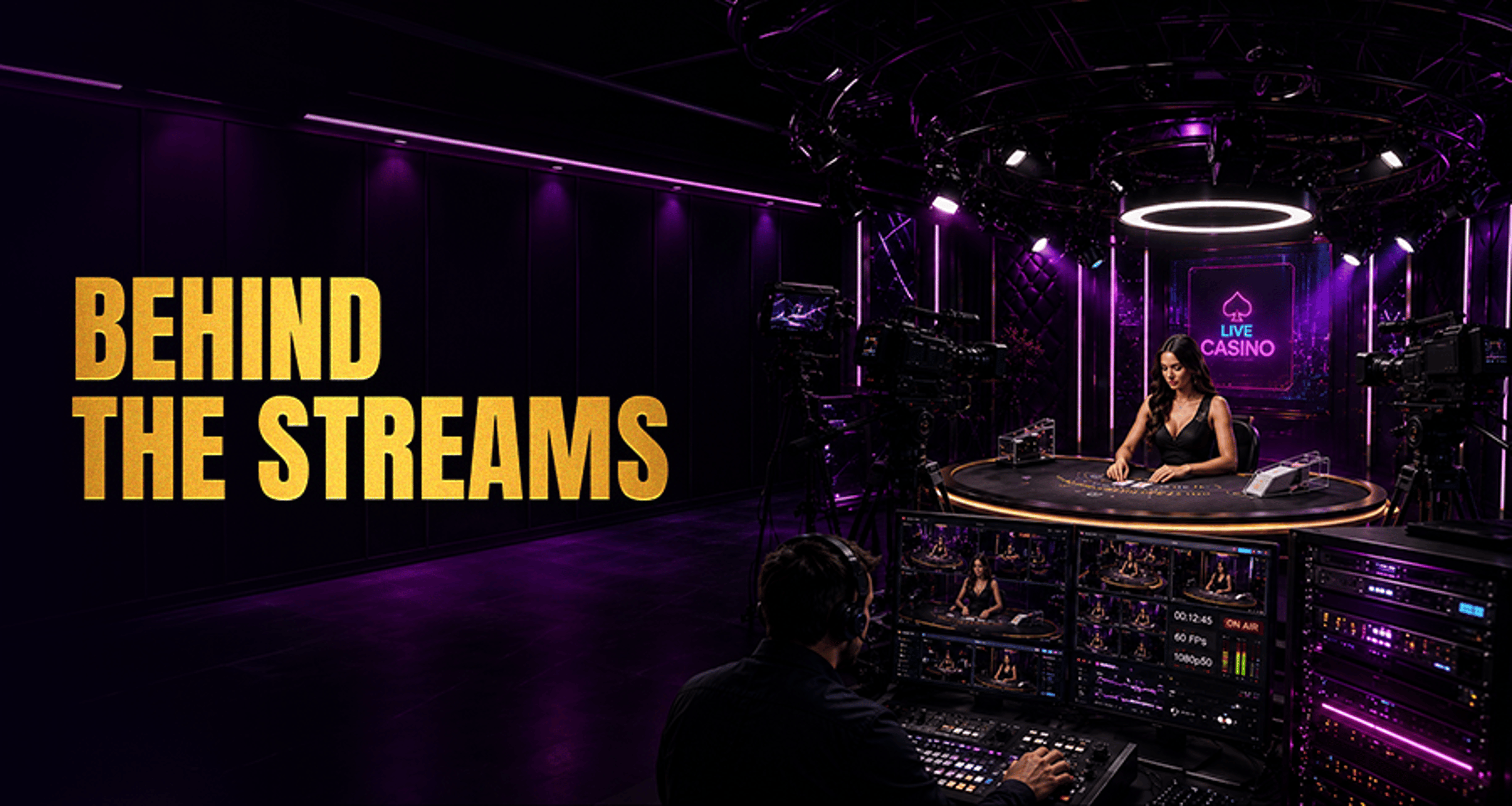
How Live Casino Streaming Works Behind the Scenes?
Modern live casino games rely on far more than a camera and a dealer. How live casino works behind the scenes reveals the technology, studio production and real-time systems that create a seamless interactive experience.
Live casino games are designed to feel closer to a real table than a standard digital casino game. Instead of pressing a button and getting an instant software result, you are watching a real dealer handle cards, spin a roulette wheel, or manage a game-show-style setup from a studio built for broadcasting.
If you have ever wondered how live casino streaming works behind the scenes, the short answer is that it combines studio production, video streaming technology, game control software, and a betting interface that keeps player actions synced with the table.
The result is a system that looks simple on screen but relies on several layers working together in real time.
What live casino streaming actually is
Live casino streaming is a format where real table action is filmed in a dedicated studio and delivered to players over the internet. A human dealer runs the game, while the platform overlays digital controls so players can place bets, make decisions, and follow results from their phones, tablets, or desktops.
This is different from standard online casino games, which usually run entirely through software using random number generation. In a live setup, the visual action comes from a physical table, physical equipment, and a real presenter or dealer.
That is also why live casino streaming should not be confused with gambling entertainment content or creator-led broadcasts. For a separate look at that side of the space, see How Streaming Influencers Affect Gambling Choices.
What happens inside a live casino studio
A live casino studio is closer to a small broadcast set than a traditional casino floor. The space is built to support game presentation, clean video capture, and reliable communication between the dealer and the platform.
A typical setup includes:
A real gaming table, such as blackjack, roulette, or baccarat
A trained dealer or host
Multiple cameras positioned around the table
Overhead and front-facing lighting
Microphones and audio monitoring
A control system that connects the table action to the digital interface
Production staff or automated switching tools that help manage the feed
The dealer is responsible for running the game in a clear, consistent way. That includes announcing actions, handling cards or chips, and following table procedures that are easy for viewers to track. If you want more context on the presenter side of the experience, Live Casino Dealer Experience First is a useful companion read.
How cameras, audio, and lighting support the table feed
The streaming experience depends heavily on production quality. Players need to see what is happening clearly, especially in games where small visual details matter.
Multiple camera angles are commonly used so the platform can show different views of the same game. A roulette stream may include a wide shot of the table, a close-up of the wheel, and a tighter angle for the final ball position. Blackjack may use a main dealer shot plus a table view that helps players follow card placement.
Audio also matters more than many people expect. A clear microphone lets players hear the dealer’s announcements, pacing, and prompts. Even when players interact mainly through the interface, spoken cues help the experience feel connected to a real table.
Lighting is there for more than visual style. It helps reduce shadows, glare, and visual ambiguity. Good lighting makes cards easier to read, wheel results easier to confirm, and overall table action easier to follow on different screen sizes.
How the stream gets from the studio to your device
Once the table action is captured, the raw video and audio have to be processed before reaching players. This is where the technical delivery stack comes in.
In simple terms, the workflow usually looks like this:
Cameras and microphones capture the live table action.
The feed is sent into encoding hardware or software.
The encoded stream is compressed into a format suitable for internet delivery.
A control layer combines the video feed with game data, interface elements, and player interaction systems.
The stream is distributed through platform servers or content delivery infrastructure.
The player’s device receives the feed and displays both the video and the betting interface.
Encoding is a key step because raw studio video is too heavy to send directly to large numbers of players. Compression reduces file size while trying to preserve enough detail for players to see the action clearly.
The platform also has to handle delivery across different devices and connection strengths. A desktop on fast broadband and a phone on mobile data may not receive the stream in exactly the same way. That is one reason buffering, quality shifts, or short delays can happen.
How player bets and decisions sync with the live table
One of the most important parts of the system is the connection between player input and the live game itself. Players are not shouting decisions into a microphone. Instead, their actions go through the platform interface.
When a player places a bet or selects an option, that input is sent to the game server. The server records the action during the allowed betting window and updates the interface. The dealer then follows the state of the game using a display or control system linked to the table.
For example:
In blackjack, the system can show whether a player has chosen hit, stand, split, or double, and the game flow updates accordingly.
In roulette, bets are collected digitally before the dealer closes betting and spins the wheel.
In baccarat, wager types are locked in through the interface before the hand is dealt.
The visible table action and the digital game layer need to stay aligned. That is why live casino systems use tracking tools, table software, and timing controls to keep betting windows, dealer actions, and on-screen updates in sync.
In some formats, optical recognition or table sensors may help convert physical outcomes into digital results. For example, card values or roulette outcomes may be tracked through camera-based reading systems and then pushed into the interface. That support layer helps the platform reflect what happened on the table without relying only on manual input.
Why latency happens in live casino streaming
Live casino streams are live, but they are usually not perfectly instantaneous. There is normally a short delay between what happens in the studio and what you see on your screen.
That delay is called latency, and it comes from several steps in the process:
Capturing video and audio
Encoding and compressing the feed
Sending the data through internet infrastructure
Processing the stream on platform servers
Buffering on the player’s device before playback
Even a well-built system needs a small amount of time to complete those steps. Platforms often balance speed against stability. If they reduce buffering too aggressively, the stream may become more vulnerable to freezes or playback issues for players with weaker connections.
So when a live dealer pauses briefly before the next action, part of that timing may be designed to account for real-world stream delay and player input windows rather than pure studio pacing.
How game integrity is typically supported
Live casino streaming relies heavily on visibility and system tracking to help players follow the action. That does not mean any platform should be assumed flawless, but the format usually supports transparency in a few practical ways.
First, players can watch the dealing or spinning happen on camera instead of seeing only a software animation. Second, multiple camera angles can make table action easier to verify visually. Third, the digital system records bets, timing windows, and outcomes so the interface stays aligned with what appears on screen.
These support mechanisms are part of why the format feels different from purely software-based games. They help show the process, not just the result.
If you are curious about how newer tools may shape this environment, AI and the Future of Live Dealers explores that topic from a broader technology angle.
How live casino streaming differs from standard online casino games
The biggest difference is that live casino streaming uses a real-time video feed from a physical table, while standard online casino games usually run entirely inside software.
In a standard RNG game:
There is no live dealer
Outcomes are generated by software logic
Results are usually instant
The visual experience is animated rather than filmed
In a live casino game:
A real dealer or host runs the session
Physical cards, wheels, or props are used
Players watch a broadcast feed
Betting and decision-making happen through a synced digital interface
Results may take longer because the game follows real table pace
That slower pace is not a flaw by itself. It is part of what makes live casino streaming feel more like a table experience than a rapid-click software game.
Common live casino formats that use this setup
The same core streaming structure can support several kinds of live games.
Common examples include:
Blackjack: card dealing with player decision points handled through the interface
Roulette: wheel-based play with digital bet placement and visual result confirmation
Baccarat: dealer-led card action with a straightforward betting structure
Game shows: studio-heavy formats with presenters, wheels, bonus elements, and more elaborate production styling
Game-show formats often lean further into entertainment presentation, set design, and host interaction. If that area interests you, Live Casino Game Shows Trends, Top Titles, and Player Insights offers more background.
Final thoughts
Understanding how live casino streaming works behind the scenes makes the format easier to read. What appears to be a simple live table on screen is really a mix of studio production, camera and audio systems, encoding, interface software, and delivery infrastructure all working together.
From the studio floor to the player screen, the goal is to keep the game watchable, interactive, and synchronized closely enough that real dealing and digital participation feel connected.
If you want to keep exploring how different live formats work, HunnyPlay’s live casino guides can help you compare game shows, dealer-led tables, and other related topics in more detail.
FAQ
How does live casino streaming work behind the scenes?
It works by filming a real dealer in a studio, encoding the video feed, combining it with betting and game-control software, and delivering the final stream plus interface to player devices.
Are live casino streams really live or slightly delayed?
They are usually live with a slight delay. The delay comes from video capture, encoding, network transfer, server processing, and device buffering.
What equipment is used in a live casino studio?
Typical equipment includes gaming tables, multiple cameras, microphones, studio lighting, encoding systems, and software that connects the physical game to the digital betting interface.
How do player bets connect to the dealer in real time?
Players place bets through the platform interface. Those inputs are recorded by the game system, which syncs the betting window and game state with the dealer’s actions at the table.
Why do live casino games sometimes lag or buffer?
Lag or buffering can happen because of internet connection quality, server load, stream compression, and the buffering needed to keep playback stable.
What is the difference between live casino streaming and RNG casino games?
Live casino streaming uses a real dealer and a filmed table, while RNG casino games run entirely through software and usually produce instant digital outcomes.