Progressive Multipliers vs Fixed Multipliers
Progressive multipliers vs fixed multipliers is more than a numbers comparison. This guide explains how each mechanic works, where they appear, and how they shape volatility, bonus features, and gameplay feel.
When players compare slot features, multiplier mechanics usually stand out fast. A multiplier can make a small hit feel more rewarding or turn a bonus round into a more exciting sequence. But not all multipliers work the same way.
The difference between progressive multipliers and fixed multipliers is less about which one looks bigger on screen and more about how the feature builds, resets, and shapes the pace of play.
This guide breaks down progressive multipliers vs fixed multipliers in plain language, shows where each type usually appears, and explains how to read these mechanics before you spin.
What Are Progressive Multipliers in Slots?
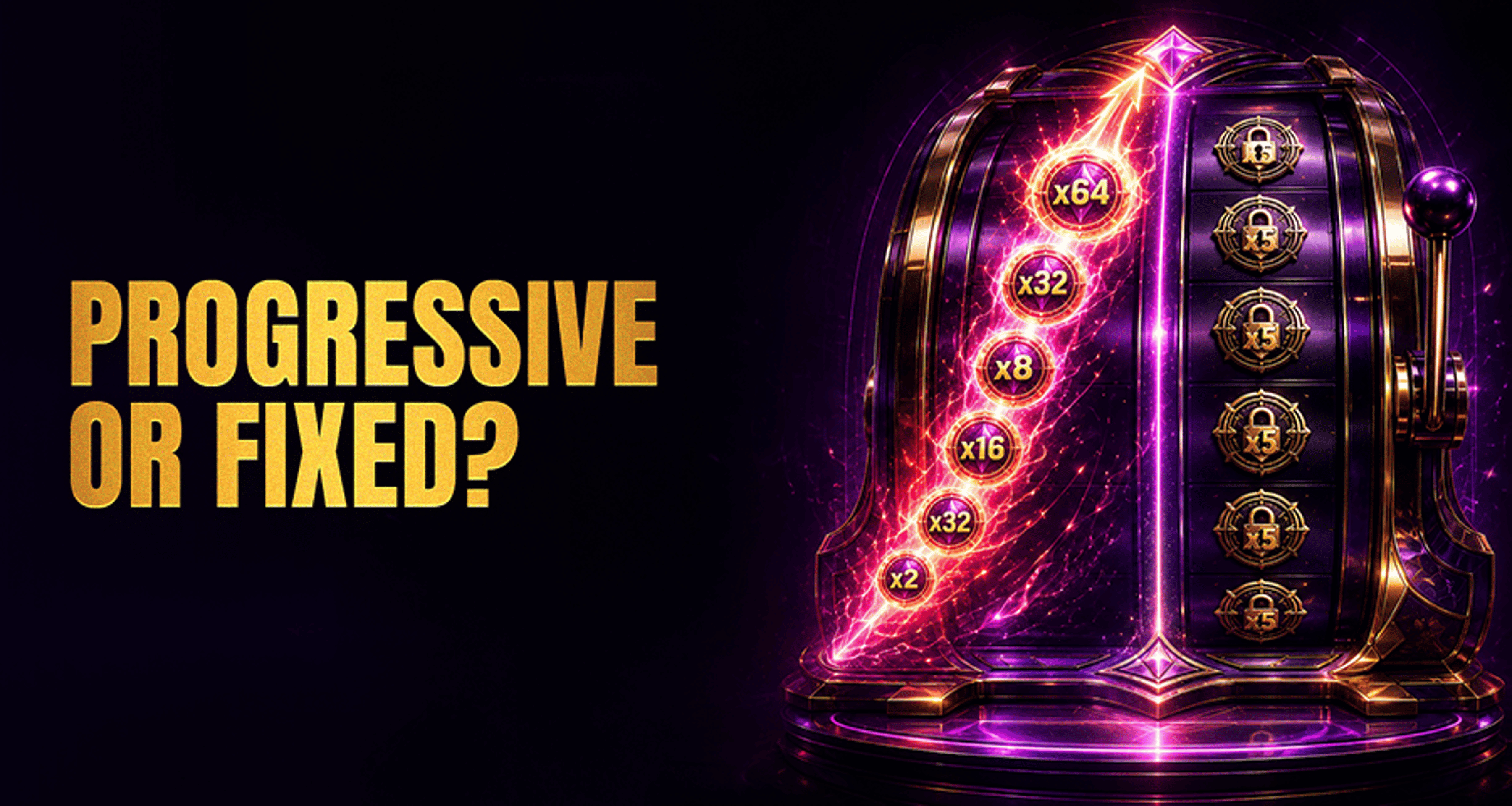
A progressive multiplier is a multiplier that increases step by step when certain in-game conditions are met. Instead of staying at one value, it builds over time during a feature, sequence, or round.
For example, a game may start a multiplier at 1x and increase it to 2x, 3x, 4x, and higher after consecutive cascades, back-to-back wins, or special symbol events.
In some games, the multiplier keeps climbing until the feature ends. In others, it resets after a win, after a losing spin, or when the bonus round finishes.
The key idea is simple: the multiplier is dynamic. It changes as gameplay unfolds.
Players often see progressive multipliers in mechanics tied to momentum, such as:
cascading reels
avalanche or tumbling win sequences
consecutive respins
free spins with growing feature values
bonus rounds that reward repeated triggers
If you want more context on how high-value multiplier moments can appear across slot features, this guide to where the biggest multipliers come from is a useful companion read.
What Are Fixed Multipliers in Slots?
A fixed multiplier is a multiplier with a set value that does not grow during the event where it applies. If a feature says 2x, 5x, or 10x, that amount stays the same for the spin, symbol, round, or bonus condition attached to it.
For example, a slot may award:
a 2x multiplier on all free spins
a 3x multiplier on wild symbols
a 10x multiplier during a bonus pick
a fixed multiplier attached to a specific reel position
The mechanic is straightforward because the value is predefined. You know the multiplier amount once the feature activates, even if the final result still depends on the symbol combination and payline or ways outcome.
Fixed multipliers are common in base games, free spins, wild features, respins, and bonus rounds because they are easy to understand and simple to present in a paytable.
Progressive Multipliers vs Fixed Multipliers: Key Differences at a Glance
Here is the core difference between progressive multipliers and fixed multipliers in slot mechanics:
Feature | Progressive Multipliers | Fixed Multipliers |
|---|---|---|
Value behavior | Increases when conditions are met | Stays at a preset amount |
Growth pattern | Builds over a sequence or feature | Does not scale during the event |
Reset behavior | Often resets after a loss, win, or feature end depending on game rules | Usually no growth to reset; reapplies at the same stated value |
Common triggers | Cascades, consecutive wins, repeat feature events, free spin chains | Wilds, free spins, single bonus states, symbol effects |
Gameplay feel | Momentum-driven and more variable | More stable and easier to read |
Player focus | Watching the multiplier build | Understanding when the set multiplier applies |
This is why comparison-intent players should look beyond the headline number. A 20x fixed multiplier and a progressive multiplier that can climb to 20x may create very different experiences even if the top value sounds similar.
How Each Multiplier Type Changes Gameplay Feel
Multiplier mechanics change how a slot feels moment to moment, even when they do not change the basic rules of how wins are calculated.
Progressive multipliers often feel more momentum-driven
Progressive multipliers tend to create a sense of build-up. Each additional cascade, consecutive win, or feature trigger can make the round feel like it is gathering energy. That can make bonus rounds feel more dramatic, especially when the multiplier is visible and updates after each event.
This style often appeals to players who enjoy:
sequences that build over time
feature rounds with rising tension
mechanics that make one spin chain feel different from the next
That said, a growing multiplier does not guarantee a bigger overall payout. If stronger symbol combinations do not land while the multiplier is high, the displayed number may still produce a modest result.
Fixed multipliers often feel more immediate and readable
Fixed multipliers usually create a cleaner, steadier feature experience. When a game says a wild is worth 3x or that all free spin wins are paid at 5x, the rule is easy to follow from the start.
This style often appeals to players who prefer:
clearer feature rules
less emphasis on build-up
bonus rounds that are easy to evaluate quickly
Because the value is set, fixed multipliers can make outcomes feel easier to interpret. But they also do not automatically mean more frequent or larger results overall. The rest of the pay model still matters, including hit frequency, symbol distribution, and how often the feature is triggered.
Where You Usually See Progressive and Fixed Multipliers
Both multiplier types can appear across the base game and bonus features, but they tend to show up in different ways.
Common uses for progressive multipliers
Progressive multipliers are often built into features where repeated success matters. Typical examples include:
cascading reels where each new tumble raises the multiplier
avalanche mechanics with a climbing win counter
free spins where the multiplier increases after every winning spin
respin features that grow stronger as special symbols land
bonus rounds with level-based progression
These mechanics are often part of games designed around feature momentum rather than one-off multiplier hits.
Common uses for fixed multipliers
Fixed multipliers usually appear in more direct applications, such as:
wild symbols with a set 2x or 3x value
free spins that apply a fixed multiplier to every win
bonus wheels or pick rounds with specific multiplier prizes
reel modifiers that attach a fixed multiplier to one reel or row
respin rounds with locked multiplier values on symbols
If you are exploring titles built around multiplier features in general, this overview of multiplier slot features can help connect the mechanic to broader game design patterns.
Which Multiplier Style Fits Different Player Preferences?
Neither multiplier style is universally better. The better fit depends on what kind of gameplay experience you enjoy.
Progressive multipliers may suit players who like:
visible momentum during a feature
a stronger sense of escalation
cascades, chain reactions, or evolving bonus rounds
suspense around how high a multiplier can climb before reset
Fixed multipliers may suit players who like:
simpler feature rules
immediate clarity about what the multiplier does
consistent bonus conditions
less dependence on a feature building over several events
The main point is that bigger displayed multipliers do not equal guaranteed larger outcomes overall. A game with a dramatic progressive meter may still produce smaller results than expected in one session, while a game with fixed multipliers may still create exciting wins when the right symbol combinations line up. Multiplier style affects the experience, not a promise of performance.
How to Read Multiplier Features Before You Spin
Before trying a slot, check the game info panel or paytable for the exact multiplier rules. This is the best way to understand whether a game uses progressive multipliers, fixed multipliers, or a mix of both.
Look for details such as:
How the multiplier starts: Does it begin at 1x, or is a higher value applied immediately?
How it grows: Does it increase after cascades, consecutive wins, or feature triggers?
Where it applies: Base game, free spins, respins, bonus rounds, or only certain symbols?
When it resets: After each win, after a non-winning event, or only when the feature ends?
Whether it stacks: Can multiple multipliers combine, or does only one apply at a time?
How it interacts with bonus structure: Does the multiplier work alongside expanding wilds, extra spins, or reel modifiers?
This kind of quick check tells you much more than a large multiplier headline alone. It helps you compare games by feature preference, pacing, and complexity.
Final Thoughts
In the progressive multipliers vs fixed multipliers comparison, the real difference is how the mechanic behaves during play. Progressive multipliers build and reset according to feature rules, often creating momentum and rising tension. Fixed multipliers stay at a set value, making them easier to read and more immediate in feel.
Neither approach guarantees better outcomes, and neither one is automatically the smarter choice. The better option is the one that matches the kind of slot experience you want: building sequences, simple bonus clarity, or a mix of both.
When comparing games on HunnyPlay, focus on multiplier mechanics, bonus structure, reset rules, and paytable details so you can choose features that fit your style rather than just chasing the biggest number.
FAQ
What is the difference between a progressive multiplier and a fixed multiplier?
A progressive multiplier increases when certain game conditions are met, such as cascades or consecutive wins. A fixed multiplier stays at a preset value like 2x or 5x whenever it applies.
Do progressive multipliers always lead to bigger wins than fixed multipliers?
No. A progressive multiplier can build to a high value, but that does not guarantee a larger overall result. Final outcomes still depend on when the multiplier applies and what symbol combinations land.
Can fixed multipliers appear in free spins and bonus rounds?
Yes. Fixed multipliers commonly appear in free spins, wild features, respins, and bonus rounds where a set value applies to wins or specific symbols.
Do progressive multipliers reset after a win or feature ends?
Sometimes. Reset behavior depends on the game. Some progressive multipliers reset after a win, some after a losing spin or broken sequence, and others only when the full feature ends.
Which slot games usually use progressive multipliers?
Slots with cascading reels, avalanche mechanics, repeat respins, and free spin features that build over time commonly use progressive multipliers.